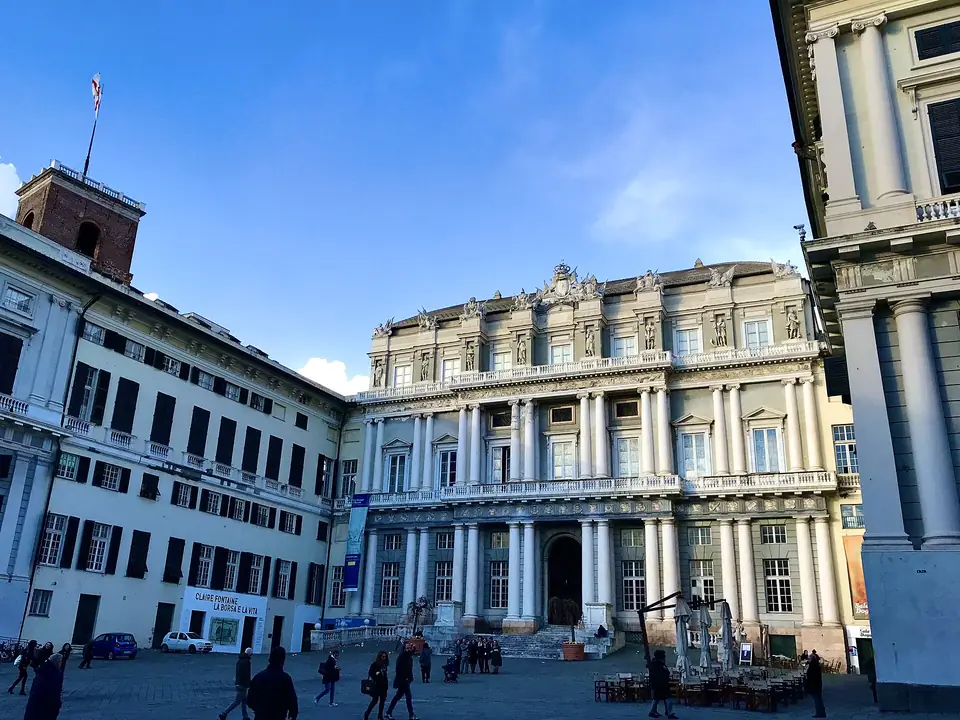
Palazzo Ducale, Genoa, where the organ was played. Not the organ itself. Photo: Sergio Spolti, CC BY-SA 4.0, cropped.

Flip Flop OrganPlastic pipes played with a flip-flop
Orange plastic pipes from the building trade became a musical instrument at Palazzo Ducale in Genoa. Passers-by could play it with a flip-flop.
Hit the end of an orange plastic pipe with a flip-flop and it gives a note. Flip Flop Organ was made of such pipes, cut to different lengths and set in a white iron frame. It was an installation and a musical instrument at the same time.
It was designed for many people to play together. It was simple and intuitive to use. Children could see how the length of a pipe changes its sound, and learn the order of the notes and scales.
How the pipes make a scale
The lengths followed the basic rule of an organ: the longer the pipe, the deeper the note. The designers studied how sound spreads, the frequency of each note, and the relation between the diameter of a pipe and its length. The rule also gave the instrument its shape.
The keyboard covered four octaves of a pentatonic scale, which is a scale of five notes: E, G, A, C and D. It was chosen because it is the scale of traditional Mediterranean songs.
A frame in place of statues
The organ was made for Palazzo Ducale, a cultural building in the old town where people meet. Two bases on its front once carried statues. The size of the frame followed those figures, so the white outline recalled their volume.
The frame was a cage of square hollow iron bars, welded at the joints and painted white. Strips of light kept the outline visible at night.
The installation took up 10 square metres. It gave people a reason to play, meet or spend time on the steps.
More doors to open
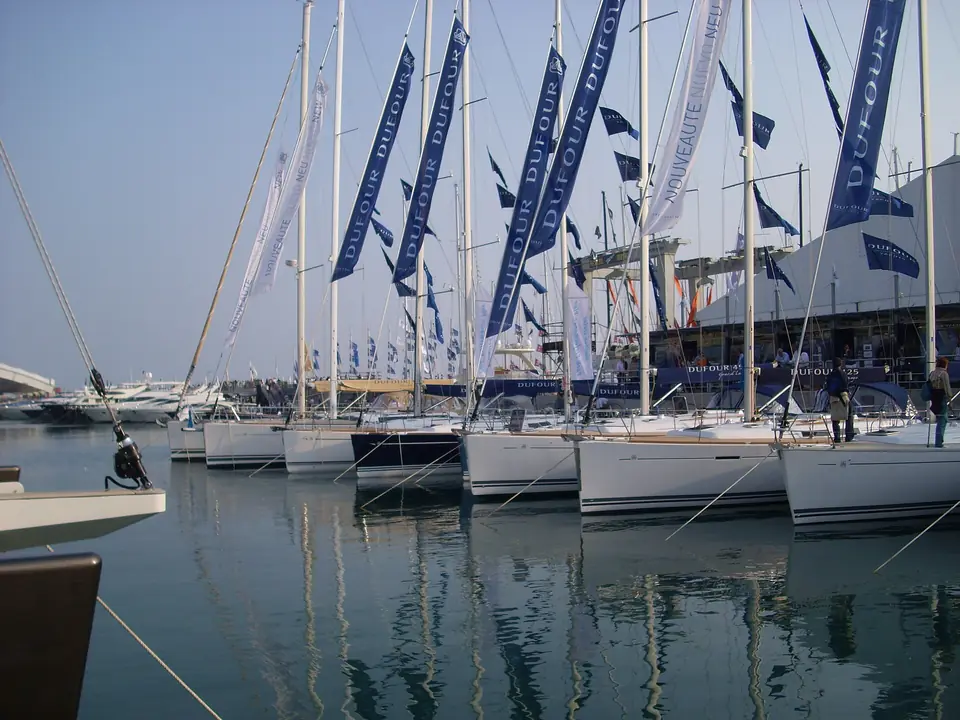 Piazza del VentoMasts, sails and brass rods that the wind playsGenoa, Italy. Built
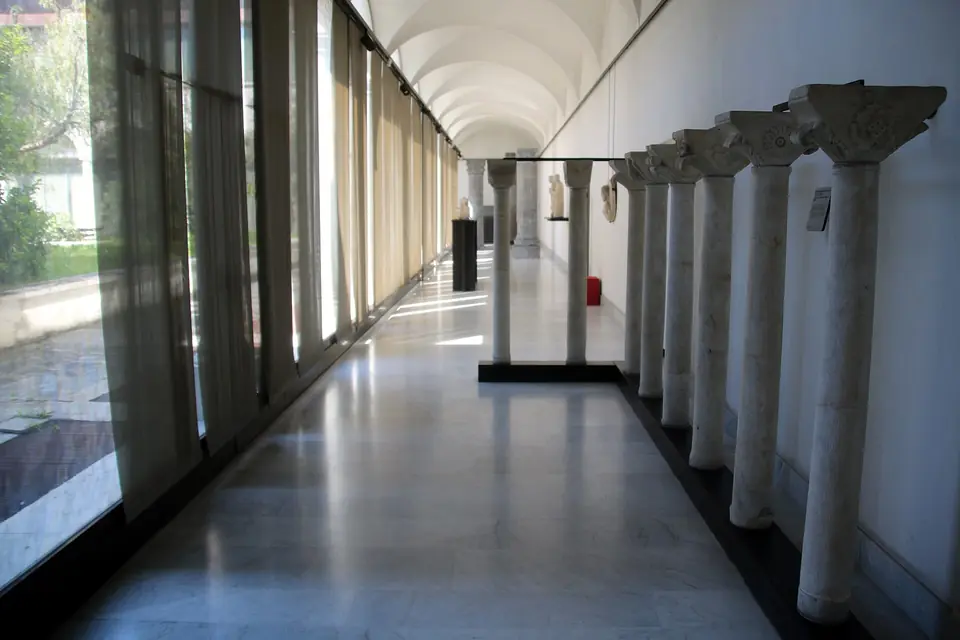 Bent!Bent wood brought boat making back into the old cityPiazza Negri, Museo di Sant’Agostino, Genoa, Italy. Built as a temporary installation
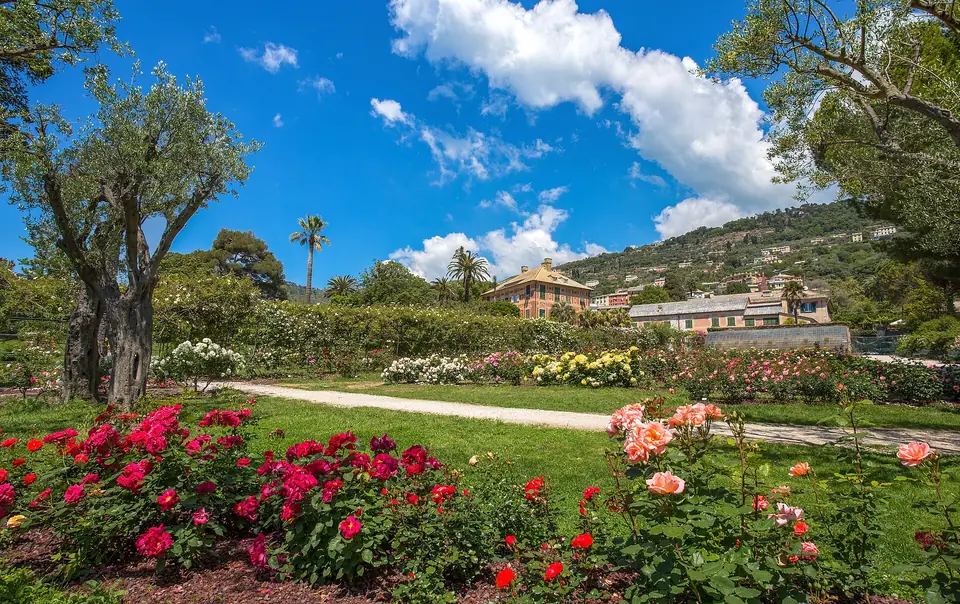 Locus AmoenusWhite pinwheels on a grid stand in for flowersParks of Nervi, Genoa, Italy. Built